July 28, 2026
Why Dubai Became a Padel City
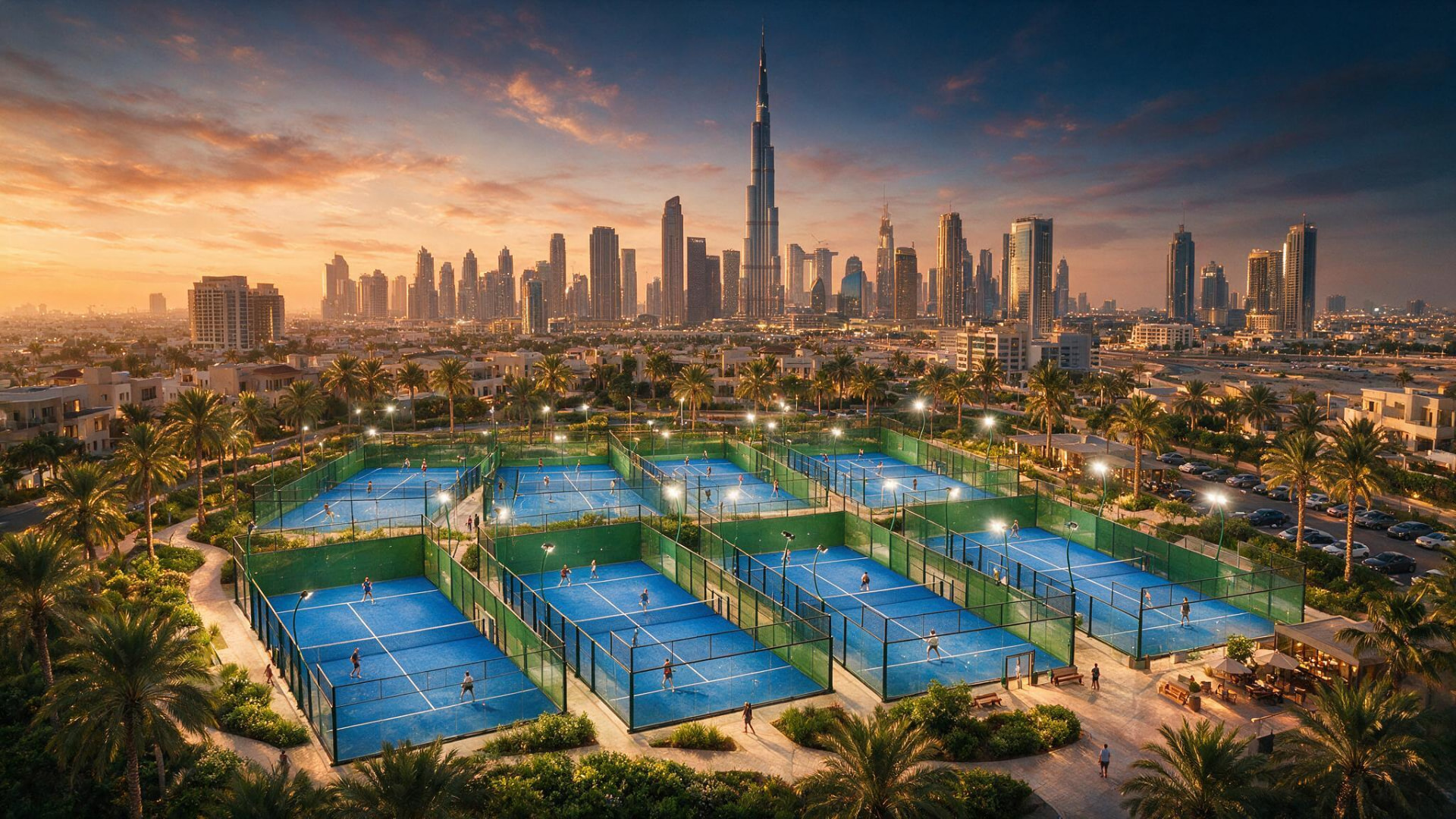
Playy is a Dubai padel app where players discover skill-matched opponents, challenge them to games, chat, and join community events to build a consistent playing network. A decade ago, padel barely existed in Dubai. A Spanish coach who moved to the city four years ago described what he found when he first arrived: a couple of courts, a handful of players, and almost no awareness of the sport among the general population. Today he cannot count the courts and everyone is playing. That transformation — from almost zero to one of the most padel-dense cities on earth — happened faster in Dubai than anywhere outside its countries of origin. Here is exactly why.
Read our comparison of padel in Dubai versus padel in Europe.
The Numbers First
The scale of Dubai's padel growth is difficult to overstate. According to the UAE Padel Association, there are now more than 900 padel courts operational in Dubai alone across more than 250 facilities. Search interest for padel in the UAE has increased by 3,000 percent over the past five years with a further 60 percent rise in 2025 alone. The UAE padel market was valued at USD 205 million in 2025 and is projected to reach USD 437 million by 2034. Padel participation across the UAE continues to grow at an estimated 40 to 50 percent annually.
These are not the numbers of a sport finding its footing. They are the numbers of a sport that has already arrived and is still accelerating.
How Padel Arrived in Dubai
Padel was invented in Mexico in 1969 by Enrique Corcuera, who built the first court at his Acapulco home with walls to keep balls from escaping into the surrounding vegetation. The sport spread to Spain in the 1970s through Alfonso de Hohenlohe, a Spanish nobleman who encountered it in Mexico and built courts at his Marbella Club. From Spain it spread across Latin America and then progressively through Europe over the following decades.
Dubai's first padel courts appeared in the early 2010s, initially serving the Spanish and Latin American expat communities who had grown up with the sport. At this stage padel in Dubai was a niche activity within a specific cultural group rather than a mainstream sport. The turning point came in the late 2010s when a combination of factors converged that would drive explosive growth.
The Perfect Storm: Why Dubai Was Ready
Several characteristics of Dubai as a city made it uniquely receptive to padel's particular appeal. None of them alone would have been sufficient. Together they created conditions that made rapid adoption almost inevitable.
The climate problem and the indoor solution aligned perfectly. Dubai's extreme summer heat makes outdoor sport impractical for several months each year. Padel's small court size means indoor climate-controlled facilities are economically viable in a way that indoor tennis courts are not. A padel venue can fit six to eight courts in the space a single indoor tennis court would require. This made indoor padel the most accessible year-round racket sport for Dubai's population and drove significant investment in indoor court construction throughout the 2010s.
The international population provided instant critical mass. Dubai's residents come from more than 200 nationalities, with large populations from Spain, Italy, Sweden, Argentina, and other countries where padel was already established. These players brought existing skill levels, cultural familiarity with the sport, and immediate demand for courts and community. They did not need to be introduced to padel — they needed courts to be built.
The lifestyle alignment was precise. Padel is social, accessible, relatively short in session duration, and visually appealing. In a city built around lifestyle experiences, premium leisure, and social status, a sport that is simultaneously social and photogenic found fertile ground.
Government Vision and Infrastructure Investment
The UAE government's Vision 2021 initiative and subsequent national visions have consistently prioritised health, wellness, and sports participation as pillars of national development. This translated into direct support for sports infrastructure investment including padel facilities across Dubai and the wider UAE.
The Dubai Sports Council has actively promoted padel as part of the city's broader sports ecosystem, supporting events, championships, and community programmes that accelerated awareness and participation beyond the initial expat community. Padel courts began appearing in residential developments, luxury hotels, and corporate campuses as developers recognised the sport's lifestyle appeal to the premium buyer and tenant demographics Dubai targets.
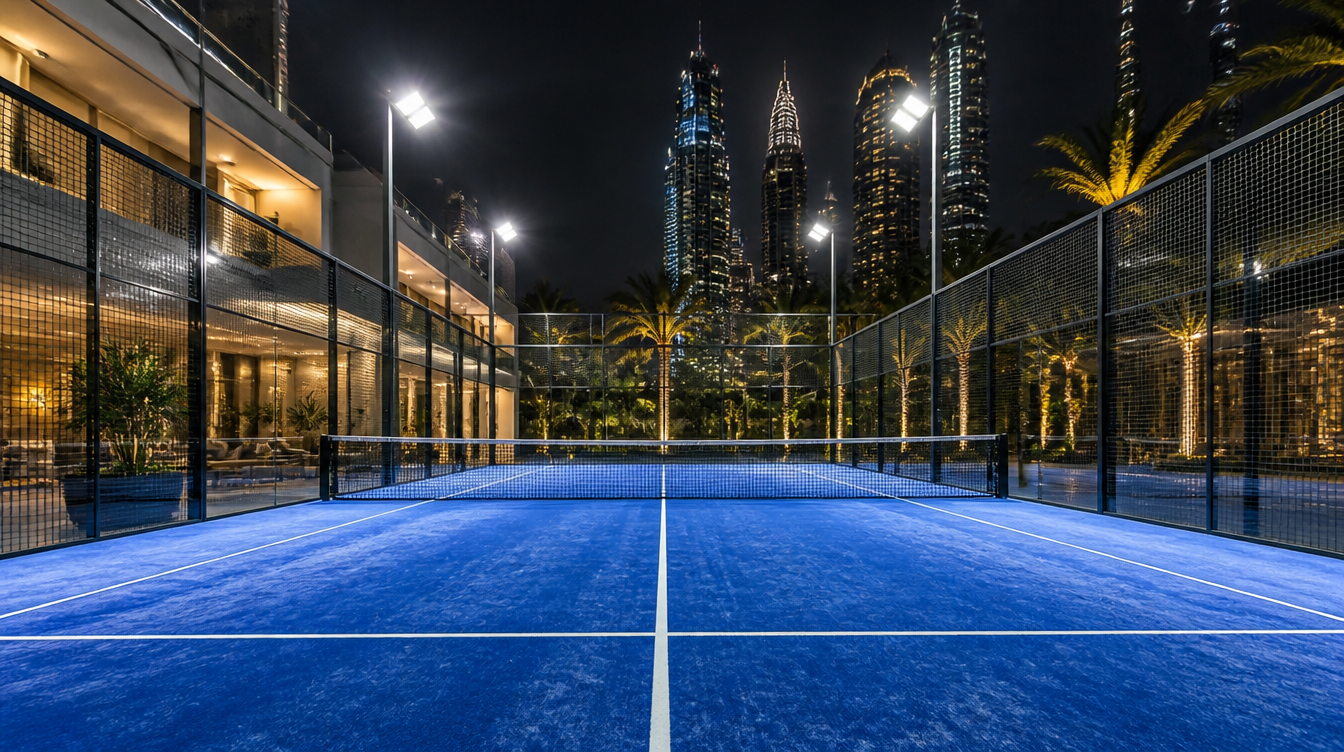
By the early 2020s padel was no longer just in standalone sports facilities. It was in the DNA of new residential and commercial development. Luxury projects in Dubai Hills Estate, Business Bay, Palm Jumeirah, and Jumeirah Village Circle began including multiple padel courts as standard amenities. As of 2026 approximately 199 property listings in the UAE feature padel courts, with some developments including eight to thirteen courts built to tournament-grade FIP standards.
The Expat Effect
The expat population's role in Dubai's padel growth cannot be overstated. Unlike established cities where social networks form over generations, Dubai's population is in a constant state of renewal — people arrive, build their lives, and sometimes move on, with new arrivals constantly entering the ecosystem.
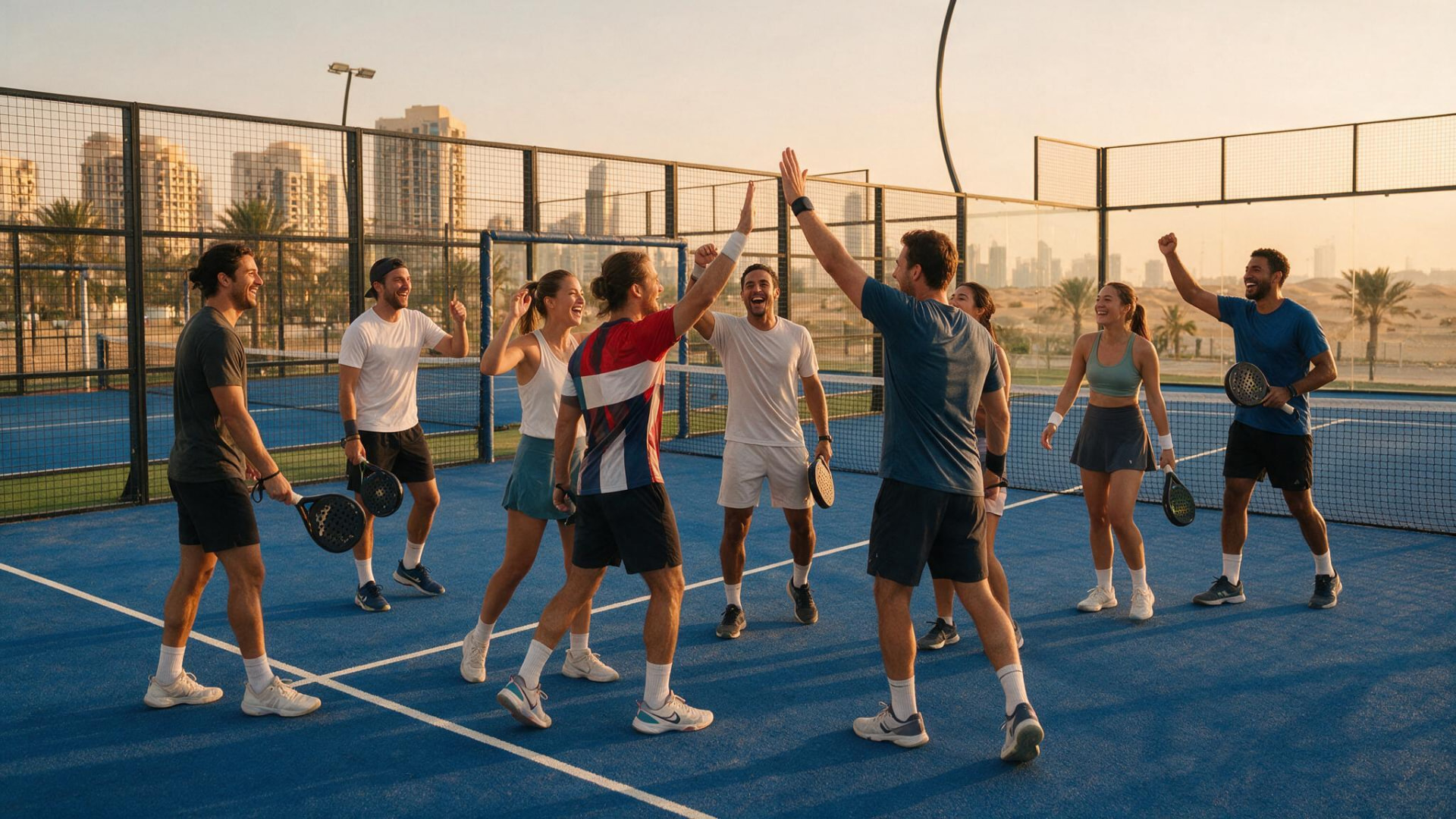
This creates a specific social dynamic where people are actively looking for community and connection in a way that long-established cities do not produce. Padel's inherently social format — always played in doubles, with the Americano rotation format providing regular new partnerships — became a primary mechanism through which Dubai's international population built social networks from scratch.
The word-of-mouth dynamic among expats accelerated adoption faster than any marketing could. A Swedish professional arrives in Dubai, is introduced to padel by a Spanish colleague, tries an Americano session, meets six new people in 90 minutes, and is instantly embedded in a social network she would have taken months to build through any other means. That experience, replicated thousands of times across dozens of nationalities, is how Dubai's padel community grew from a niche to a mainstream.
Read our guide on how expats make friends through sport in Dubai.
The Social Format That Fit Dubai Perfectly
The Americano format deserves specific credit for Dubai padel's growth in a way that is not fully appreciated. In Spain and Argentina where padel is most deeply embedded, the sport is played largely in fixed pairs and established club teams. The social network already exists and padel is how you spend time with people you know.
Dubai does not have that existing network. The Americano — where partners rotate after every set so you play with and against everyone in the session — solved a specific problem: how do you build a playing community when nobody knows each other? The format produces maximum new connections per session. Show up as a stranger to an Americano at ISD Padel or Central Padel and leave knowing eight people. Do it three times and you have a padel network. That is how Dubai's padel community actually grew at the community level, one Americano at a time.
Read our guide on the Americano format — the format that drives Dubai padel culture.
The 2022 World Championships Moment
A specific moment that accelerated Dubai's padel profile internationally was the 2022 World Padel Championships. When Doha was unable to host the event at short notice, Dubai stepped in and delivered the tournament within a dramatically compressed timeline. The UAE Padel Association filled a stadium for the International Padel Federation World Championships and delivered an event that, according to board member Al-Marzooqi, played an important role in padel's evolution across the entire Middle East.
The championship was a statement of intent. It signalled to the global padel community that Dubai was not simply a growth market — it was a world-class padel destination capable of hosting the sport's highest level of competition. The Premier Padel Tour Dubai P1 confirmed for November 2026 continues that trajectory, bringing professional padel's global elite to the city and generating the kind of exposure that turns casual interest into active participation.
Where Dubai Goes Next
The trajectory points strongly upward. The UAE padel market is projected to grow from USD 205 million in 2025 to USD 437 million by 2034. Participation is growing at 40 to 50 percent annually. The Premier Padel Tour is bringing elite professional competition to the city. And perhaps most significantly, padel is increasingly mentioned as a candidate sport for the Los Angeles 2028 Olympics — a development that would accelerate global awareness and participation in ways that would benefit every established padel market including Dubai.
The sport has also moved beyond its initial expat base into the broader UAE population. Arabic-speaking Emirati and Arab players are increasingly part of the community, broadening the sport's social reach and deepening its roots in the city's culture rather than remaining a primarily expat phenomenon.
Read our guide on how to find a padel partner in Dubai.
Be Part of the Community
Playy is a Dubai padel app where players discover skill-matched opponents, challenge them to games, chat, and join community events to build a consistent playing network. Dubai's padel story is still being written and the community is actively growing. Whether you are a long-term Dubai resident who has been watching padel grow around you without trying it, or someone who just arrived and wants to find their place in one of the world's most dynamic sports communities, Playy connects you with the players and sessions that make the community work.
Download the app free on iOS or Android and find your first session today.
The Bottom Line
Dubai became a padel city because the conditions were uniquely right — a climate problem that indoor padel solved, an international population that brought padel culture from home, government investment in sports infrastructure, a social format that solved the connection challenge of expat life, and a city culture that embraced the sport's lifestyle appeal. The growth from a handful of courts to over 900 in under a decade is one of the most remarkable sports adoption stories of the 21st century.
You are playing in one of the best padel cities on earth. That is not an accident — it is the result of a very specific combination of factors that came together in a very specific place at a very specific moment.