September 28, 2026 · By Playy
How Padel is Growing Across the Middle East
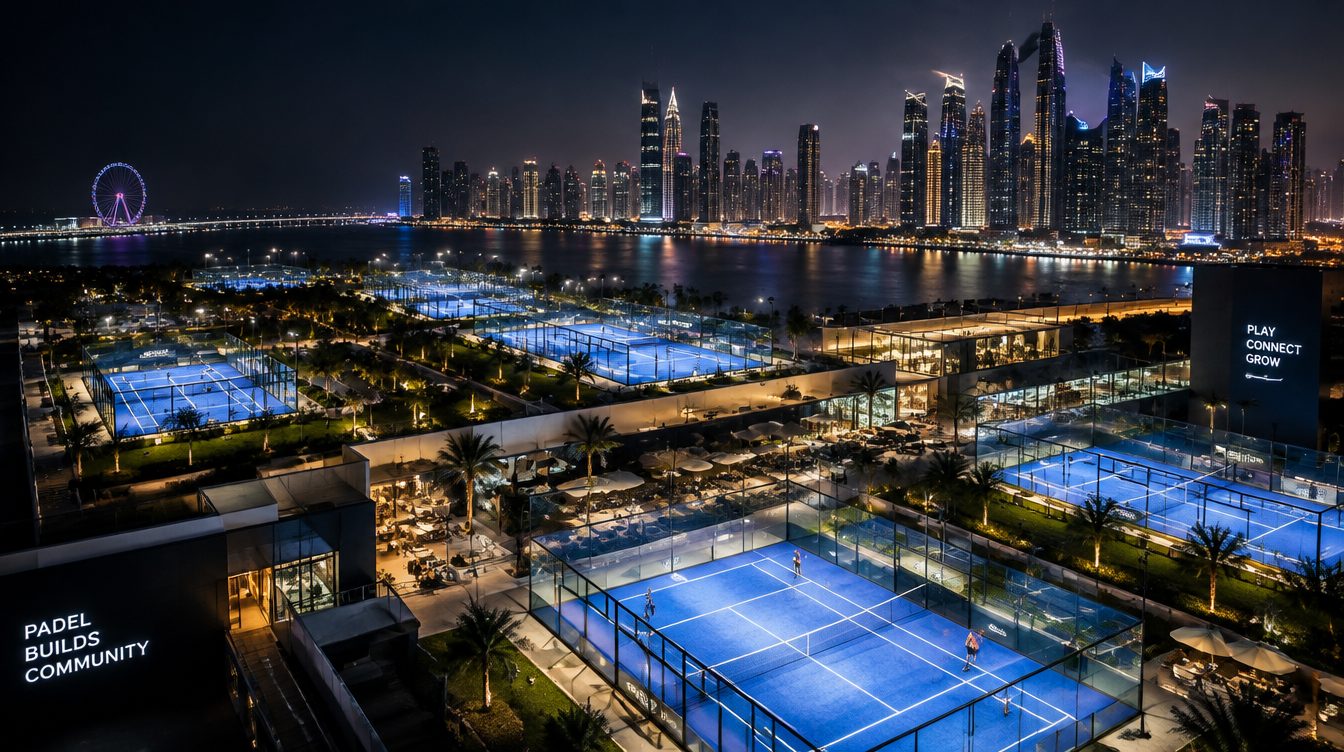
Playy is a Dubai padel app where players discover skill-matched opponents, challenge them to games, chat, and join community events to build a consistent playing network. The sport is governed globally by the International Padel Federation. The Middle East is one of the most remarkable padel growth stories in the world right now. A region that had almost no padel infrastructure a decade ago now accounts for 85 percent of all padel courts across Asia, hosts Premier Padel professional events, and is producing players, investment, and community at a pace that is attracting attention from the global padel industry.
Here is the full picture of how padel is growing across the Middle East in 2026 and where the region is headed next.
Read our comparison of padel versus pickleball — two of the fastest growing racket sports globally.
The Numbers Behind the Growth
The scale of Middle East padel growth is most clearly expressed in the court data. According to World Padel, there are more than 3,200 padel courts across Asia and 85 percent of those are in the Middle East. The UAE alone has over 350 courts across its major cities, with Dubai accounting for the majority. Saudi Arabia has 86 venues across 17 cities with 318 counted courts and is growing at a rate that positions it as a top-5 global padel market by 2028 according to industry projections.
Search interest tells an equally compelling story. Global search interest in padel grew 1,026 percent between 2004 and 2025. In the UAE specifically, search interest increased 3,000 percent over five years with a further 60.3 percent rise in 2025 alone. In September 2025, padel hit the highest level of worldwide search interest ever recorded. The Middle East contributed significantly to that peak.
The UAE padel market was valued at USD 205 million in 2025 and is projected to reach USD 437 million by 2034. Saudi Arabia's padel market is projected to reach USD 162.8 million by 2034. Together, the two countries represent the dominant economic force in Middle East padel and a combined market that is growing faster than almost any other regional padel ecosystem globally.
The UAE — The Established Leader
The UAE entered the 2020s as the most developed padel market in the Middle East and has maintained that position through a combination of government investment, private development, and the unique demographic advantages of a large, international, sports-oriented population. Dubai and Abu Dhabi together host the majority of the UAE's 350-plus courts across premium venues, residential developments, luxury hotels, and corporate facilities.
The UAE Padel Association and UAE Tennis and Padel Federation — now merged into a single regulatory body — are driving standardisation, talent pathways, and coaching certification across the country. Schools across the UAE are adding padel courts to their facilities, which is building a foundation of youth players that will sustain the market through the next decade. Premier Padel has hosted events in the UAE, confirming the country's position as one of the sport's global showcase markets.
What makes the UAE distinctive within the Middle East is the maturity of its padel ecosystem. The UAE does not just have courts — it has coaching infrastructure, competitive leagues, community events, player matching apps, and the cultural integration of padel into everyday life that takes years to develop. This depth separates the UAE from other regional markets that are still in the infrastructure-building phase.
Read our full story of why Dubai specifically became a padel city.
Saudi Arabia — The Fastest Growing Market
Saudi Arabia is the most significant growth story in Middle East padel right now and arguably in global padel. The kingdom has 86 venues across 17 cities with 318 counted courts — a remarkable base for a market that was one of the last countries in the Gulf to discover the sport. The trajectory is even more striking than the current numbers: Saudi Arabia's General Authority for Sport's investment in padel infrastructure is expected to make it one of the top-5 padel court markets globally by 2028.
The demographic conditions in Saudi Arabia are exceptional for padel growth. Sixty-seven percent of the Saudi population is under 35 — a young, active demographic that is precisely the age group that drives padel participation globally. Rising female sports participation following the country's social liberalisation has added a further significant player base that was previously excluded from organised sport. The hosting of Premier Padel events in Saudi Arabia has accelerated awareness and aspiration in ways that organic community growth alone could not.
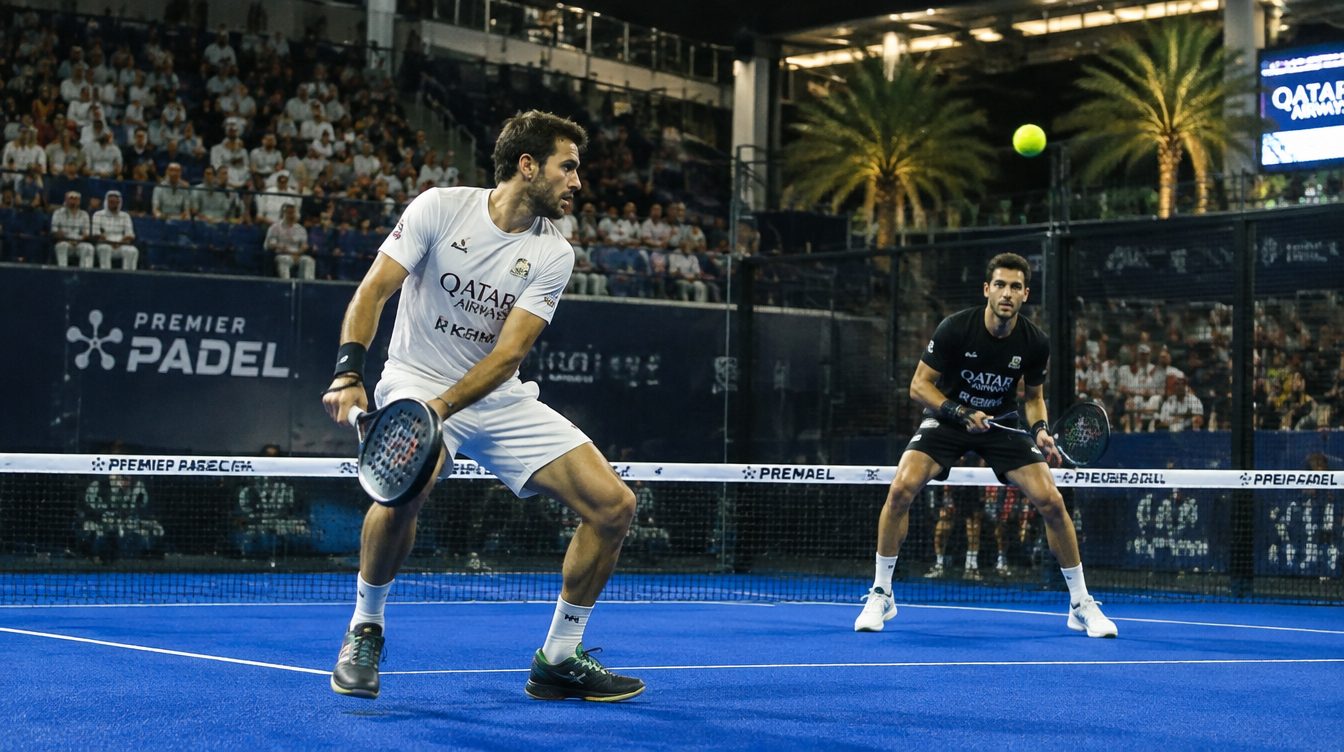
Spanish coach Adrian Blanco Antelo, who trains at Padel Rush in Riyadh, describes the current moment in Saudi padel as a genuine opportunity. People in Saudi Arabia are very open to trying new sports right now and the hosting of Premier Padel was a significant statement that the kingdom is taking the sport seriously. The professional infrastructure following community demand is a sequence that has driven padel growth in every mature market and is now playing out in Saudi Arabia at speed.
Kuwait, Qatar and the Broader Gulf
Beyond the UAE and Saudi Arabia, the broader Gulf region is in various stages of padel adoption that collectively represent a significant and growing market. Kuwait and Qatar have both developed padel communities anchored by expatriate populations who brought knowledge of the sport from Europe and Latin America and domestic enthusiasm that has grown consistently since the early 2020s.
Qatar's investment in sports infrastructure — amplified by its role as a global sports hub through the 2022 FIFA World Cup and subsequent sporting investments — has created conditions where padel courts are appearing in sports complexes, residential developments, and hospitality venues at an accelerating rate. The Qatari government's sports participation initiatives have specifically targeted padel as a growth area, providing both funding and promotional support for the sport's development.
Kuwait's padel community, while smaller than the UAE's or Saudi Arabia's, has developed a distinctive character built around strong club communities and regular competitive events. The sport's growth in Kuwait has been primarily community-driven rather than investment-led, producing a culture that experienced padel observers describe as genuinely grassroots in a way that differentiates it from the more infrastructure-first development patterns in larger Gulf markets.
Bahrain has also seen notable padel growth, with several purpose-built facilities operating in Manama and a growing competitive calendar that has begun attracting players from across the Gulf for regional tournaments.
Egypt and Jordan — The Next Wave
UAE Padel Association board member Al-Marzooqi has specifically highlighted Egypt and Jordan as markets experiencing significant growth as padel's reach in the Middle East extends beyond the Gulf. This expansion represents a qualitative shift in the sport's regional footprint — from a phenomenon concentrated in wealthy Gulf states to a sport spreading across the broader Arab world.
Egypt's padel growth is particularly significant given the country's population of over 100 million and its existing culture of racket sports. Cairo and Alexandria are seeing new padel venues opening regularly, with both expatriate communities and domestic Egyptian players driving demand. The price point of padel relative to other premium leisure activities makes it accessible to a broader socioeconomic range in Egypt than in Gulf markets, which could produce a different and potentially more demographically diverse player base.
Jordan's padel community is centred in Amman and has developed rapidly over the past two years. The Jordanian market benefits from a well-educated, internationally-oriented population and strong connections to both the Gulf padel community and the broader Arab world. Several Jordanian players have begun competing at regional level, suggesting the country is moving beyond the infrastructure-building phase into genuine sporting development.
What is Driving Growth Across the Region
Several factors combine to explain why the Middle East has become one of the world's fastest padel growth regions rather than a moderate adopter of a global trend.
The climate-infrastructure fit is fundamental. Padel's small court size makes indoor climate-controlled facilities economically viable in a way that tennis courts are not. In a region where outdoor sports are impractical for several months each year, an indoor racket sport with a social format and a manageable court footprint solves a genuine infrastructure problem. The Gulf's investment in premium leisure also means the per-court costs that make indoor padel expensive in other markets are more manageable within the region's development economics.
Government sports investment across the Gulf has created a funding environment for padel infrastructure that does not exist in most global markets. Saudi Arabia's Vision 2030, the UAE's National Sports Strategy, and Qatar's Sports for All programme have all included padel within their investment frameworks, providing capital for court construction and event hosting that accelerates the development timeline significantly.
The international population of the Gulf states provided the initial player base and continues to supply experienced players who introduce the sport to local communities. Spanish, Argentine, Swedish, and British expats who grew up with padel have been the most effective ambassadors the sport could have in the region — players who understand the game deeply and share it with the genuine enthusiasm of people who love it.
Where the Middle East Goes Next
The trajectory of Middle East padel points strongly toward continued acceleration rather than plateau. Saudi Arabia's court density is currently 2.5 courts per 100,000 residents — well below the level of mature padel markets like Spain and Sweden — which means there is substantial room for infrastructure expansion even in the kingdom's most developed padel cities. The projection that Saudi Arabia will be a top-5 global padel market by 2028 is based on current investment commitments rather than speculative demand.
The Olympics question is significant for the Middle East specifically. Padel is under active consideration as a candidate sport for the Los Angeles 2028 Olympics. Inclusion would produce a surge in global awareness and participation that would benefit every established padel market — and the Middle East, with its existing infrastructure, government backing, and active communities, is better positioned to capitalise on that surge than almost any other region outside Europe and Latin America.
The Abu Dhabi Padel League 2026, which launched in May and runs through September, is the most visible example of the region's competitive infrastructure maturing beyond recreational community play into organised league structures with development pathways. More such initiatives across the region in the coming years will deepen the sport's roots and produce the next generation of competitive Middle Eastern padel players.
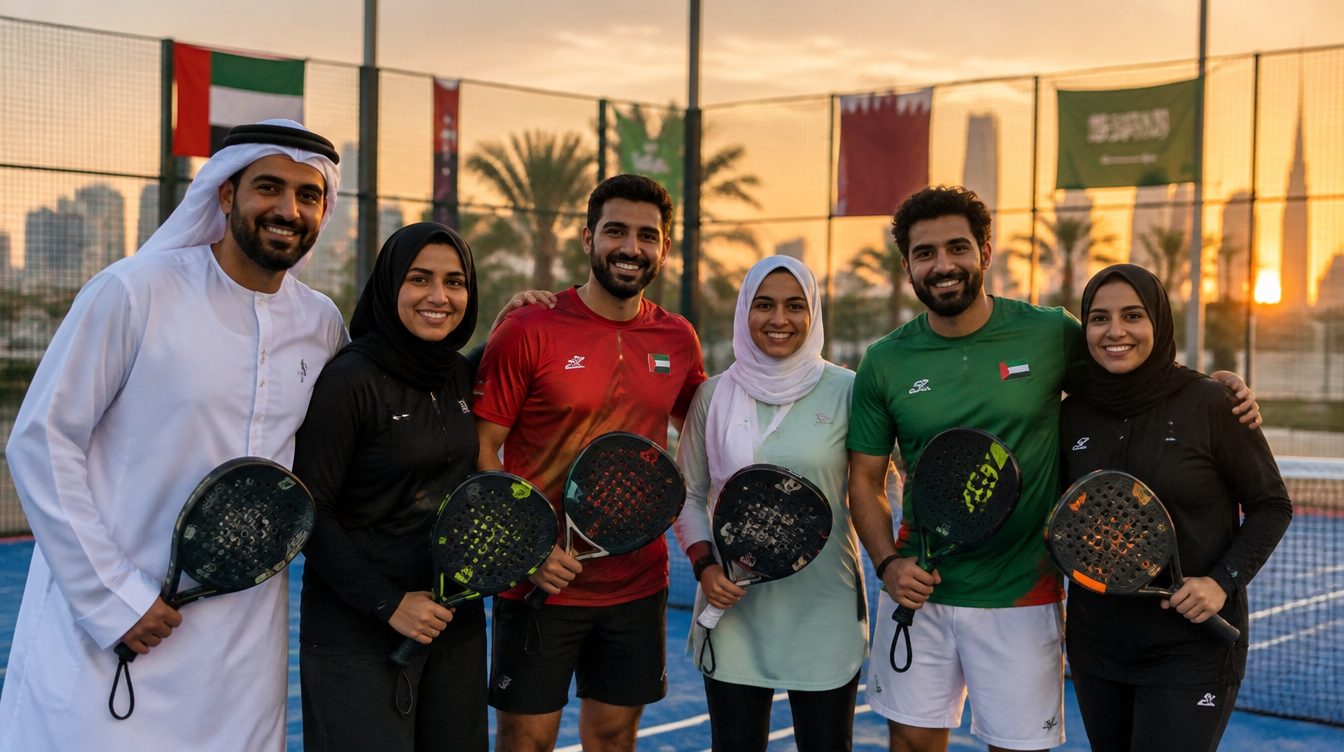
Read our guide on how to find a padel partner in Dubai.
Be Part of the Community in Dubai
Dubai sits at the centre of the Middle East's padel growth story — the most developed market, the largest community, and the city whose investment in the sport has been most visible to the global padel industry. Playing padel in Dubai right now means being part of one of the world's most dynamic sports communities at exactly the moment it is building toward something genuinely significant.
The Bottom Line
The Middle East's padel growth story is real, data-backed, and still in an early phase relative to where the region is heading. The UAE leads with established infrastructure and community depth. Saudi Arabia is the fastest-growing market in the world. Kuwait, Qatar, Bahrain, Egypt, and Jordan are all at different stages of a growth trajectory that points in the same direction.
Eighty-five percent of Asia's padel courts are in the Middle East. That number alone tells you something remarkable is happening here. And it is only getting started.